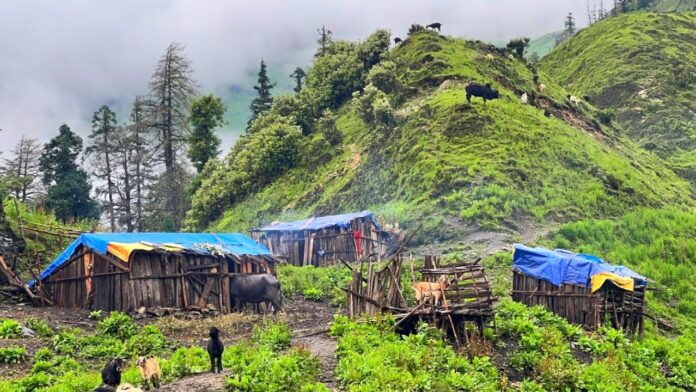
Dehradun: Under the visionary leadership of Chief Minister Pushkar Singh Dhami, the Uttarakhand Tourism Department, in collaboration with the Forest Department, is preparing to transform traditional mountain “Chhaniyas” and “Kharaks” into eco-huts to promote rural self-employment and sustainable tourism in the Himalayan state.
The pilot project will soon begin in the remote Dudhatoli-Binsar region of Pauri Garhwal and along the Jhulka Danda Trek in the Nagthat area of Jaunsar, Dehradun district. After the successful implementation of the model, similar traditional shelters located near trekking routes across the state will also be developed as eco-huts.
The ambitious initiative, launched under Uttarakhand’s Eco-Tourism Policy, aims to bring tourists closer to Himalayan nature while creating self-employment opportunities for local youth. Traditional shelters situated along trekking routes will be upgraded into eco-friendly accommodations for trekkers, hikers and nature lovers.
Tourism Secretary Dhiraj Garbyal said the project is an important part of the state’s eco-tourism strategy. The eco-huts will be equipped with bio-toilets, water treatment systems and waste management facilities to ensure environmental sustainability and cleanliness in forest and mountain regions.
Local youth groups will be trained and entrusted with the management and operation of these eco-huts. The initiative is expected to generate employment opportunities within villages and help curb migration from hill regions. Most of the revenue generated through the project will remain within the local economy.
The Tourism Department will provide financial assistance, infrastructure support and training under its Trekking Traction Center Homestay Grant Scheme. Training modules will include eco-hut management, hospitality, sanitation and safety practices. Standardized premium tariffs will be charged from tourists to maintain quality services while promoting sustainable tourism and environmental conservation.
The move also comes in the backdrop of restrictions on camping and night stays in Uttarakhand’s fragile alpine meadows, or bugyals, following High Court directives aimed at protecting these ecologically sensitive zones. The eco-hut model is expected to offer trekkers a safe and environmentally responsible alternative for overnight stays in forest areas.
Officials believe the concept will attract both domestic and international tourists seeking authentic nature-based experiences away from overcrowded urban destinations. The project will also help regulate trekking-related tourism activities while reducing ecological pressure on high-altitude meadows.
In Uttarakhand’s mountain regions, the tradition of living in “Chhaniyas” or “Kharaks” represents a unique Himalayan lifestyle. Rural families spend nearly six months every year, from April to October, in these temporary shelters located in forests and alpine pastures while tending livestock.
These traditional huts, usually made of stone, wood and grass, are not only part of the rural economy but also play a vital role in maintaining ecological balance. Families move to higher grazing grounds during summer months where nutritious grasses are available for cattle, sheep and goats.
Residents produce milk, ghee, khoa and other dairy products in these remote settlements, which are later sold in nearby markets and towns. Men typically take care of livestock while women process dairy products, creating a self-sustaining rural ecosystem built on community cooperation.
The practice also supports environmental conservation by preventing excessive grass growth in forests and enriching soil fertility through livestock manure, thereby helping preserve biodiversity in alpine ecosystems.
However, with increasing urbanization and changing lifestyles, the traditional Chhaniya culture has gradually started disappearing. Experts believe that reviving these structures through eco-tourism can preserve both Himalayan heritage and local ecology while opening new avenues of rural entrepreneurship.
The eco-hut model is expected to encourage tourism-based micro-enterprises such as homestays, guided trekking, local cuisine services, cultural tourism activities and the sale of traditional products. The initiative could emerge as a sustainable employment model for Uttarakhand’s youth in the years ahead.