
Dehradun: The Uttarakhand government has taken a concrete step to turn a major problem into an opportunity. Pine needles (locally called pirul — the dry leaves of chir pine trees), a primary cause of forest fires, are now being transformed into a strong base for self-employment and livelihood for rural women.
Secretary of Rural Development, Dhiraj Singh Garbyal, has directed all Chief Development Officers (CDOs) to prepare a detailed action plan to link Women Self-Help Groups (SHGs) and Cluster Level Federations (CLFs) with pirul collection and its value addition. This initiative is expected not only to protect forests from fires but also to provide a stable source of income for women in the hills.
Uttarakhand has abundant chir pine forests. Approximately 16.36% of the state’s total forest area (around 3,99,329 hectares) is covered by chir pine. Every year after winter, a large quantity of dry needles falls from these trees. These needles become highly flammable in summer, and even a small spark can burn down entire forests. In recent years, forest fires have caused significant damage to biodiversity, wildlife, and the lives and property of local people.
Government’s Vision
Secretary, Dhiraj Singh Garbyal stated that the government’s goal is to provide employment and additional income to thousands of women in the state while strengthening environmental conservation. This scheme can prove to be a powerful tool for both environmental protection and women’s empowerment.
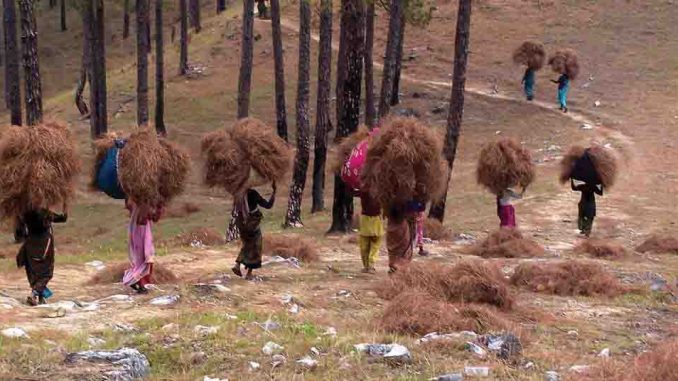
The Rural Development Department will directly involve active Women Self-Help Groups in this work. Women will collect pirul from forests and receive immediate payment. The Forest Department is currently purchasing pirul at ₹10 per kg — a significant increase from the earlier rate of ₹2–3 per kg. This higher rate is expected to motivate greater participation.
Modern Collection Centres
The most important aspect of the plan is the establishment of pirul collection centres in every development block (block level). These centres will be equipped with modern machinery, including:
- Shedders (for shade drying)
- Dryers (for rapid drying)
- Pelletizers (for making pellets)
- Baler machines (for bundling)
- Tractors and other transport vehicles
At these centres, collected pirul will be processed into fire pellets or briquettes. These can be used as clean fuel for household stoves, industries, or even biomass-based power generation. The sale of pellets will generate additional income for SHGs, ensuring double economic benefits.
Empowerment and Income for Women
This scheme is set to be a game-changer for rural women. Thousands of SHGs are already active in Uttarakhand. They will now be engaged in collection, drying, packing, and value addition of pirul.In some areas, small pilot initiatives have already shown success — women are making handicrafts (such as rakhis, baskets, and wall decorations) from pirul and earning up to ₹7,000 per month.With large-scale implementation, earnings are expected to rise further. A woman can easily collect 20–30 kg of pirul in a day after finishing household chores, potentially earning ₹200–300 extra daily. The activity can continue for several months depending on the season.Cluster Level Federations (CLFs) will organize these groups, provide training, and link them to markets. This will lead to economic empowerment of women, increased family income, and a stronger rural economy.
Major Contribution to Environmental Protection
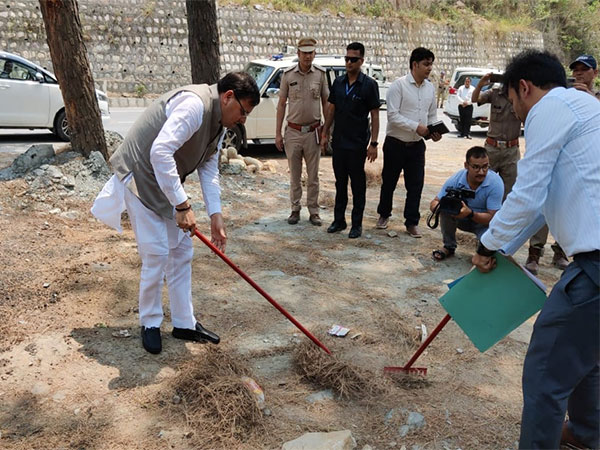
Systematic collection of pirul is expected to significantly reduce forest fire incidents. Without piles of dry needles on the forest floor, the risk of fires will decrease. Every summer, hundreds of hectares of forest in Uttarakhand are destroyed by fires, affecting soil fertility, increasing carbon emissions, and threatening wildlife and air quality.This initiative is an excellent example of a green economy and circular economy — converting waste (pirul) into useful products.
Elements to be Included in the Proposal
- List of targeted blocks
- Time-bound plan for procurement and installation of machinery
- Training programmes for women
- Market linkages for pellets
- Monitoring and evaluation mechanism
Better coordination between the Forest Department, Rural Development Department, and Women Empowerment Department has been emphasized.If successful, this scheme could lead to the expansion of pirul-based industries in Uttarakhand.
Apart from pellets, pirul can be used to make paper, compost, insulation material, and other products. This will boost local employment and support the state’s green energy initiatives.The government believes that pirul collection will not only reduce the threat of forest fires but also open a new chapter of sustainable self-employment for women.
This initiative is an important step towards making Uttarakhand self-reliant and environmentally friendly. If implemented on time, it has the potential to transform the lives of thousands of women while protecting the state’s forests.