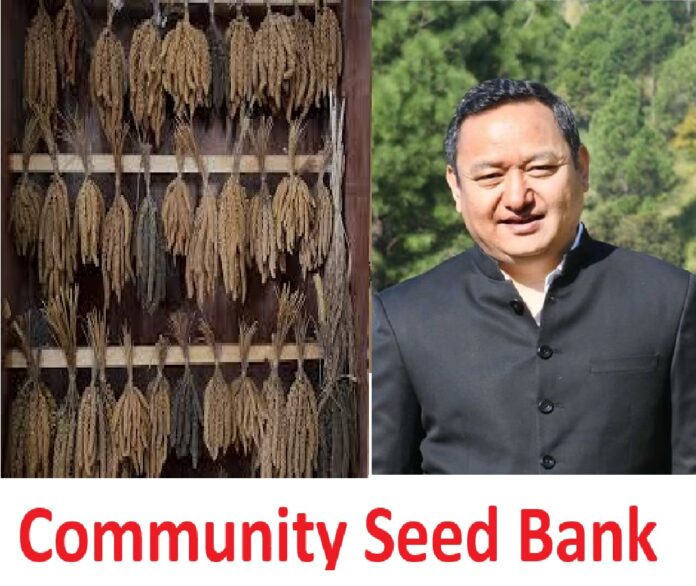
Dehradun: In a significant push to revive traditional agriculture and strengthen rural livelihoods, the Uttarakhand government has launched a large-scale community seed bank initiative across Chamoli district. The Rural Development Department will establish seed banks in 70 villages spread across six development blocks, covering 960 families in the first phase. The project is designed to preserve indigenous seed varieties, improve crop diversity, enhance food security, and meaningfully increase the income of mountain farmers.
Rural Development Secretary Dhiraj Singh Garbyal, who is leading the initiative, said the project addresses multiple challenges facing hill agriculture simultaneously. “Our objective is to ensure the availability of traditional seeds, protect crop diversity, and increase farmer incomes. At the same time, this will build climate resilience and strengthen food security across the region,” he said.
Breathing Life into an Ancient Tradition
What makes this initiative culturally distinctive is its roots in a centuries-old Uttarakhand practice. For generations, brides in the region brought seeds and grains from their parental homes as part of their wedding trousseau. This custom naturally enabled the exchange of seed varieties across different valleys and micro-climates, keeping crops genetically diverse and locally adapted. Over time, as modern agricultural patterns changed, this tradition faded — and with it, many indigenous seed varieties began to disappear.
The community seed bank project is a direct attempt to bring that living tradition back in an organised, institutional form. Secretary Garbyal noted that the seed bank network will recreate the diversity and exchange that once happened organically through these wedding customs, now supported by government infrastructure and expert guidance.
Six Blocks, Wide Reach
The programme will be implemented across six development blocks of Chamoli: Dasholi, Gairsain, Nandanagar, Narayanbagar, Deval, and Karnprayag. Hundreds of villages within these blocks will be part of the scheme. A strong social equity component has been built into the project — at least 50 percent of participating families must be women-headed households or belong to Scheduled Caste and Scheduled Tribe communities, ensuring the benefits reach the most marginalised sections of the farming population.
PwC Report Drives Government Action
The CM Pushkar Dhami government moved forward on this initiative on the basis of a detailed report prepared by global consultancy firm PricewaterhouseCoopers (PwC). The report described the seed bank model as innovative and highly suitable for rain-fed, terraced mountain agriculture — the dominant farming system across Uttarakhand’s hill districts. It highlighted the project’s potential to create local employment while building a sustainable agricultural ecosystem.
Beyond seed conservation, the initiative will also facilitate the formation of Farmer Producer Organisations (FPOs) and cluster-level federations. These institutions will give small and marginal farmers greater collective bargaining power, better access to markets, and improved negotiating capacity with buyers and traders — all critical for the long-term economic stability of hill farming communities.
Heritage Crops Across 317 Hectares
The agricultural footprint of the project is substantial. Seed production will be carried out across approximately 317 hectares of land, cultivating a rich diversity of traditional Uttarakhand crops. These include red rice, mandua (finger millet), jhangora (barnyard millet), rajma (kidney beans), soybean, kala bhatt (black soybean), bajra (pearl millet), and barley — crops that are not only nutritionally rich but also well-adapted to the harsh and variable conditions of mountain agriculture.
Once harvested and processed, these seeds will be made available to farmers across multiple hill districts, including Bageshwar and Rudraprayag, extending the project’s ecological and economic impact well beyond Chamoli.
Strong Returns for Farmers
The financial case for the project is compelling. The cost of implementation has been fixed at ₹25,000 per hectare. Against this, participating farmers are estimated to earn a net income of ₹75,000 to ₹1,00,000 per hectare — a return of three to four times the investment. Over the two-year project period, systems for seed collection, processing, grading, and marketing will be fully developed, creating a value chain that keeps income circulating within the mountain communities rather than flowing out to external suppliers.
For a region where agricultural income has long been insufficient to retain younger generations, this initiative offers a concrete economic argument for staying on the land and returning to the crops that have defined Uttarakhand’s identity for centuries.