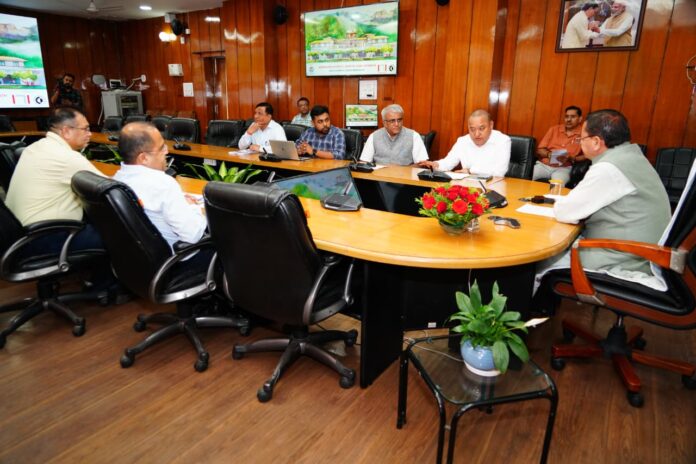
Dehradun: Chief Minister Pushkar Dhami on comprehensive review meeting at the state secretariat with senior Tourism Department officials to assess the progress of the Badrinath Dham Master Plan, reaffirming the government’s commitment to transforming the sacred shrine into a world-class spiritual destination while preserving its ecological and cultural integrity.
The Chief Minister emphasised that all necessary provisions would be incorporated into the master plan to make Badrinath Dham more divine, grand and attractive, with local culture, environmental conservation and spiritual sanctity remaining the foremost priorities.
“The ongoing reconstruction works at Badrinath Dham will not only strengthen its spiritual atmosphere but will also elevate tourism to new heights,” Dhami said. “Upon completion, the shrine will stand as a symbol of the harmonious confluence of faith, modernity and nature.”
Project Overview
The master plan carries an estimated total cost of approximately ₹424 crore to ₹481 crore, covering an area of 85 hectares and being implemented in three phases. Conceived along the lines of the successful Kedarnath reconstruction model, the project incorporates the concept of a Smart Spiritual Hill Town and is being executed under the direct supervision of Chief Minister Dhami, in alignment with Prime Minister Narendra Modi’s vision. The long-term objective is to develop infrastructure capable of accommodating the anticipated surge in pilgrim footfall over the next 50 years.
Tourism Secretary Dheeraj Garbiyal, who presented a detailed briefing during the meeting, confirmed that work is progressing rapidly on multiple fronts.
Key Developments and Attractions
Dev Darshani Point — A specially designed vantage point from which pilgrims will receive their first awe-inspiring view of the dham in a grand and divine setting.
Badri Narayan Chowk — To be developed as a premier spiritual and cultural hub, featuring enhanced public spaces and improved pilgrim amenities.
ISBT Wall — A showcase of the region’s cultural heritage through large-scale murals based on local art and religious themes.
Vasudha Vatika — A landscaped garden integrating nature, spirituality and Uttarakhand’s traditional art forms.
Symbolic Installations — Monumental artworks depicting Lord Vishnu’s emblems — including the Panchjanya Shankha, Kaumodaki Gada, Sudarshana Chakra and Vaikuntha Dwara — along with Sheshnetra artwork and structures themed around the Panch Tatva (five elements), bringing Indian philosophy to life. Symbols from the Ramayana and Mahabharata eras will also be incorporated.
Diya Aarti Ghat — A dedicated sacred aarti site to offer pilgrims a deeply immersive spiritual experience.
Streetscape Development — Eco-friendly pedestrian pathways, modern lighting, seating, signage and beautification works. Riverfront development along the Alaknanda, along with parking facilities, cloak rooms and waiting halls, are also planned.
Additional works include a hospital building, two bridges, residential quarters for priests, beautification of Badrish Lake and Sheshnetra Lake, a loop road and an arrival plaza. Several of these works have already been completed, while others are progressing at pace.
Environmental and Cultural Commitments
Given the Himalayan region’s vulnerability to earthquakes, floods and landslides, the master plan places significant emphasis on flood-resilient design, ecosystem strengthening along the Alaknanda riverbank and sustainable development practices.
All artworks, murals and themed installations are being executed with the involvement of local artisans and craftspeople to preserve cultural authenticity. Proposed museums and art galleries will further document and celebrate Uttarakhand’s folk art, mythology and spiritual traditions.
Local communities are also being integrated into the project through homestay opportunities and employment generation.
Economic Significance
The Chardham Yatra forms a cornerstone of Uttarakhand’s economy. Officials anticipate that the improved infrastructure will drive a significant increase in pilgrim numbers during the May-to-November travel season, with multiplier benefits for local hospitality, transportation and handicrafts sectors.
Tourism Secretary Dheeraj Garbiyal affirmed: “Work on developing Badrinath as a Spiritual Smart Hill Town is moving forward swiftly. The master plan prioritises the beautification, cultural identity and spiritual importance of the area, while ensuring environmental and religious sensitivities are never compromised.”
Situated at an altitude of approximately 3,133 metres in the Himalayan ranges, Badrinath Dham is one of Hinduism’s four sacred Char Dhams, dedicated to Lord Badrinarayan — a form of Lord Vishnu. The concept of the Smart Spiritual Hill Town was initiated as early as 2020-21, with Prime Minister Modi personally reviewing its progress.