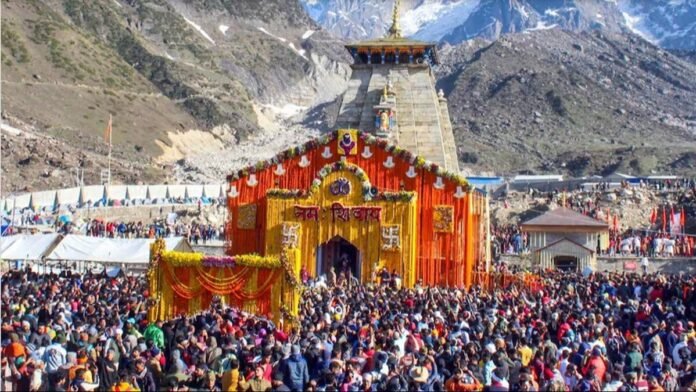
Rudraprayag. With the ceremonial closing of the portals of Shri Kedarnath Dham—one of the world-renowned twelve Jyotirlingas—for the winter season, the official financial account for this year’s entire pilgrimage season has been released. Up until the closing day on November 11, 2026, the Shri Badrinath-Kedarnath Temple Committee received a historic total revenue of ₹51,18,45,901 (approximately ₹51.18 crore) from various sources. The unwavering devotion of pilgrims from across India and abroad toward Baba Kedar can be gauged from the fact that even on the final day of the yatra, devotees offered ₹1,00,651 in the form of ‘Thali Bhent’ (plate offerings). Driven by a record turnout of pilgrims and a transparent digital and counter system, Kedarnath Dham’s revenue this year has significantly strengthened the temple committee’s treasury.
Looking at the detailed figures from the daily income report released by the temple committee, devotees showed the highest interest in booking special prayers and rituals (puja-archana) through both online portals and temple premise counters throughout the season. This year, the temple generated its highest single share of revenue—₹20,31,28,800—from the puja counters. Following this, a total of ₹10,40,24,380 was recorded from Thali Bhent, the cash offerings placed respectfully in the temple plates by devotees inside the sanctum sanctorum and temple premises. These figures reflect how ordinary pilgrims donated generously at Baba’s feet.
Smooth and expedited darshan arrangements during the pilgrimage also contributed substantially to the temple’s earnings. The priority darshan facility operated for pilgrims arriving at the shrine via helicopter services from the Kedar Valley fetched ₹8,58,53,100 for the temple committee. Additionally, utilizing modern banking channels, donors from different parts of the country contributed ₹6,39,91,822 directly under the donation and special puja heads via RTGS and cheques. The substantial funds received through digital modes underscore growing transparency in the temple’s donation system and the heightened trust of devotees.
Speaking of other major revenue heads, ₹2,63,89,258 was deposited into the temple fund from Atka, general donations, and Bhog arrangements. Meanwhile, ₹92,09,420 was earned through special donations made by distinguished contributors, and ₹84,48,028 came from the subordinate temples operating under the Kedarnath Dham administration. Furthermore, protocol darshan fees designated for VIP guests generated ₹67,37,500, while sales from prasad counters run by the temple committee brought in ₹29,09,700.
Accommodation facilities and other traditional arrangements also provided steady income to the committee. Under this category, the temple committee’s rest houses (Vishram Grihas) generated ₹8,94,500, and rent from various properties yielded ₹1,83,301. Notably, despite the digital era, many devotees continue to send their offerings through postal services, resulting in ₹65,092 received via money orders, while traditional Bandhan Puja added ₹11,000 to the temple coffers.
Overall, the 2026 Kedarnath pilgrimage season will be remembered not only for the massive influx of devotees but also as a benchmark for well-organized management and record revenue collection by the temple committee. Temple officials believe that this historic income will play a pivotal role in expanding pilgrim amenities, beautifying the shrine complex, and further strengthening religious and cultural activities at the local level in upcoming pilgrimage years. Following the closure of the portals, the movable idol (Chal Vigraha Doli) of Baba Kedar has been ceremonially installed at its winter seat, Shri Omkareshwar Temple in Ukhimath, where devotees will be able to offer prayers for the next six months.