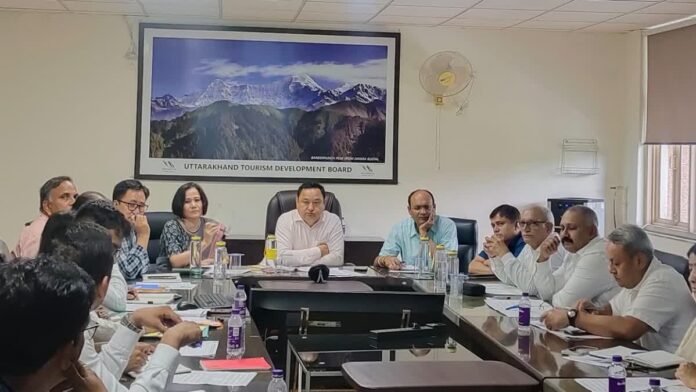
Dehradun: Uttarakhand is gearing up to showcase the natural beauty of its picturesque valleys, dense forests and unexplored destinations to tourists from across the world. In a major initiative to boost eco-tourism in the state, the Forest Department has prepared a roadmap for more than 30 new eco-tourism projects. However, the timely preparation of Detailed Project Reports (DPRs) has emerged as a major hurdle in taking these ambitious plans forward. To overcome this challenge, the department has approached the Tourism Department, seeking technical assistance and access to its empanelled consultants.
The Eco-Tourism Wing of the Forest Department has started preparations to secure funding for the proposed projects under various state and central government schemes. In this regard, the Chief Conservator of Forests (CCF), Eco-Tourism, has written to the Tourism Secretary, requesting access to experienced consultants empanelled with the Tourism Department.
A comprehensive DPR is essential for obtaining administrative and financial approval for any major government project. However, the preparation of these reports often takes several months, delaying the implementation of otherwise promising initiatives. The Forest Department wants to eliminate such delays by ensuring that the DPRs are ready in advance. This would allow work on the projects to begin promptly once the required financial approvals are granted by the state government or the Centre.
Uttarakhand’s diverse natural landscape offers enormous opportunities for developing eco-tourism. Activities such as jungle safaris, adventure trekking, nature trails, birdwatching and camping can be promoted across different forest areas of the state. The proposed projects aim to introduce tourists to lesser-known natural destinations while ensuring that tourism development remains closely linked to environmental conservation.
The initiative is also expected to generate new employment and self-employment opportunities for local communities, particularly rural residents and young people living in remote mountain areas. Tourism-related activities could create livelihoods through homestays, local transportation, guiding services, camping facilities and other associated businesses. Such opportunities may also help address the persistent problem of migration from hill villages by providing people with sustainable income sources closer to home.
Despite the considerable potential, limited financial resources have remained a major constraint for the Eco-Tourism Wing. The department currently does not have sufficient funds to independently hire private consultants and spend substantial amounts on preparing DPRs for more than 30 projects. As a result, several proposed initiatives risk being delayed at the planning stage.
Sharing resources with the Tourism Department could provide a practical solution. If the Tourism Department agrees to make its empanelled consultants available, the Forest Department will be able to obtain expert assistance without incurring additional expenditure on hiring separate consultants. This arrangement would not only reduce the financial burden but also strengthen coordination between the two departments.
Confirming the development, CCF (Eco-Tourism) P.K. Patro said that a letter had been sent to the Tourism Secretary requesting the services of empanelled consultants. He expressed hope that the Tourism Department would respond positively to the proposal.
Patro said that once approval is received, the process of preparing DPRs for the proposed projects will be accelerated so that they can be submitted for financial approval without further delay.
The success of the initiative now largely depends on the Tourism Department’s response. If the proposal receives the necessary support, it could significantly speed up the implementation of Uttarakhand’s eco-tourism plans.
The development could open up new destinations on the state’s tourism map, diversify its tourism offerings and strengthen the local economy. More importantly, by combining nature conservation with community-based tourism, Uttarakhand could create a sustainable model in which local communities benefit economically while the state’s rich natural heritage is protected.