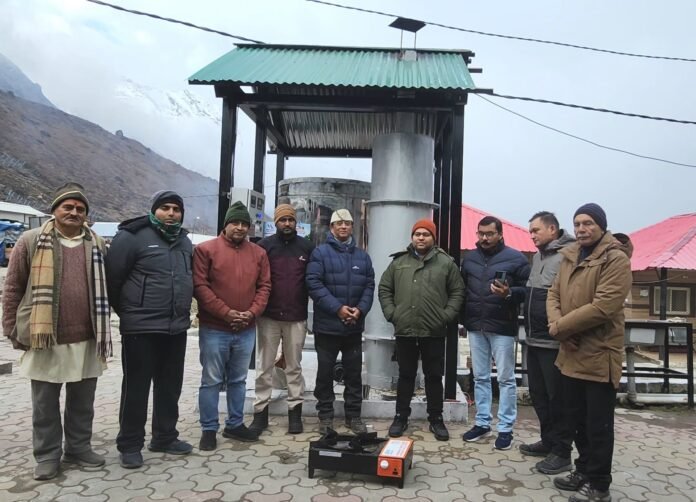

Rudraprayag: For years, one problem has troubled both pilgrims and the administration along the Kedarnath route: the proper disposal of dung left behind by thousands of mules. During the Char Dham Yatra, large numbers of mules and horses carry pilgrims between Gaurikund and Kedarnath every day, and the dung that piles up along the trail has long been a serious environmental challenge. Now Uttarakhand has taken an unusual step to turn that challenge into an opportunity.
On the initiative of the Pushkar Singh Dhami government, fire pellets are being made for the first time in India from a mixture of mule dung and pirul, the dry needles of the chir pine. A special unit has been set up at Sonprayag for the purpose. Pirul is widely regarded as a major cause of forest fires in the hills, while heaps of dung have repeatedly raised questions about cleanliness on the pilgrimage route. Combining the two problems to produce fuel is being seen as an important experiment in environmental protection.
The first visible use of these pellets has come at Kedarnath itself. The Rudraprayag District Magistrate inaugurated the first hot water generator installed at the shrine for the convenience of devotees, and since then pilgrims arriving at the temple have been getting hot water free of charge. At Himalayan heights, where even touching ordinary water becomes difficult in the biting cold, the facility is being seen as a major relief for visitors.
It is also true that the unit is not yet in a position to produce pellets on a large scale. As a result, the disposal of dung is also happening only in limited quantities for now. Officials say, however, that results during the trial phase have been far better than expected. The quality of the pellets and the heat they generate have raised confidence about the future of the project. It is believed that if production capacity is increased, the model could become an example not only for the Kedarnath route but for the entire Himalayan region.
According to experts, these biomass pellets are carbon neutral. That means the carbon dioxide released when they are burned is roughly equal to what plants and organic matter absorbed from the atmosphere during their growth. In that sense, they offer a cleaner and better alternative to fossil fuels such as coal, diesel or cooking gas.
Uttarakhand’s Tourism Secretary Dhiraj Garbyal said the use of the pellets will not be limited to hot water boilers. Roadside eateries, or dhabas, along the pilgrimage route will also be provided with fire stoves that run on them, helping owners save on gas and diesel costs. He added that in future the pellets will also be used in the furnaces of industries operating in the state, reducing dependence on conventional fuels.
The project has been carried forward with the support of the Uttarakhand Tourism Department. The Rudraprayag district administration, the Chief Veterinary Officer of Rudraprayag and the Rudraprayag Forest Department have also extended their cooperation. The unit has been established and is being run by the non-governmental organisation Hifeed.
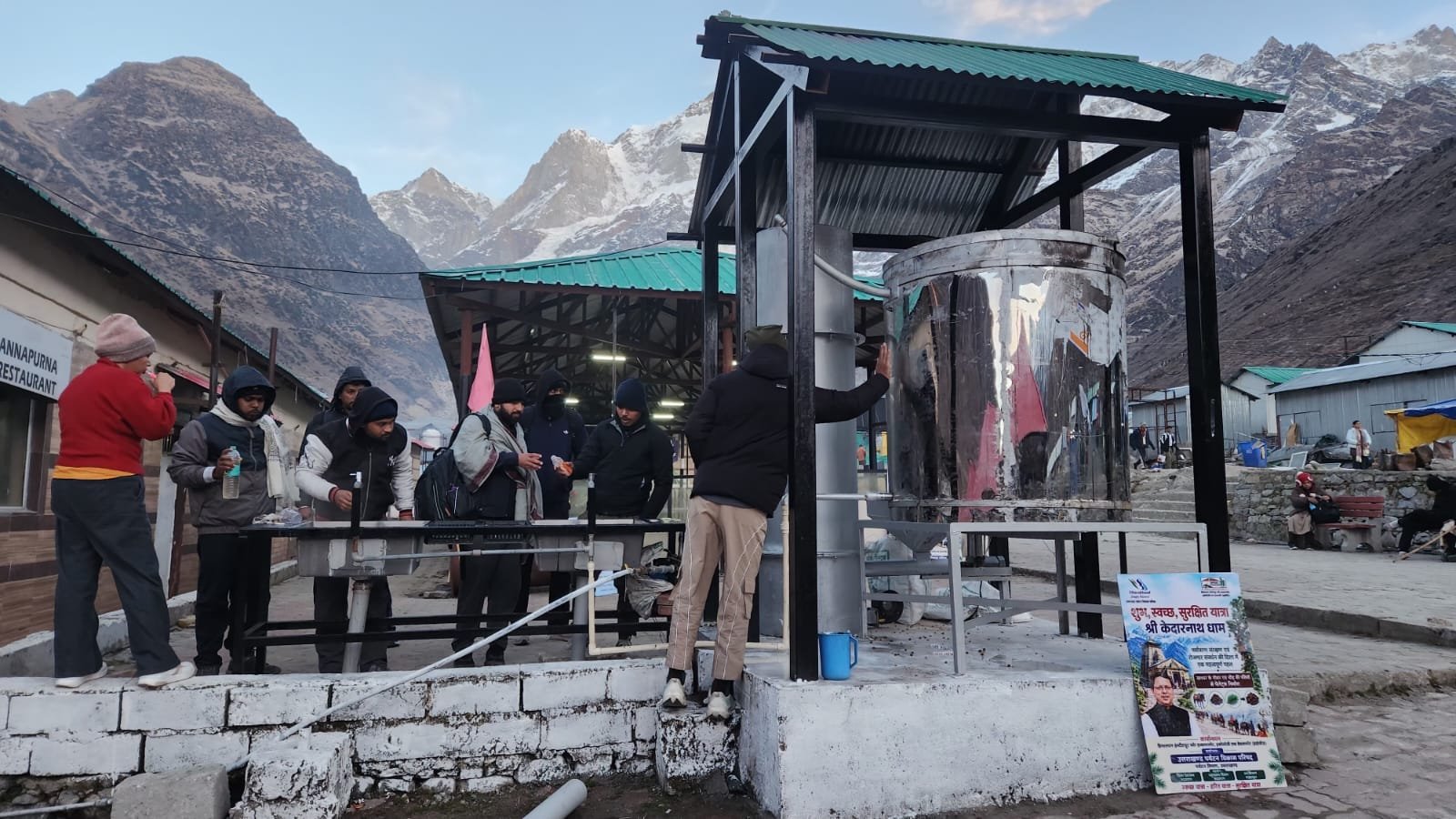
Hifeed Director Udit Ghildiyal said the work was far from easy. Setting up the unit at Sonprayag in the middle of the heavy pilgrimage rush and constant movement, and then transporting and installing the hot water generator at remote Kedarnath, proved extremely difficult. Moving machinery and materials posed several challenges, he said, but the team did not give up and completed the work on schedule.
Udit Ghildiyal also said the facility would soon be expanded. Hot water generators will be installed at Linchauli and Gaurikund in the coming days, allowing pilgrims on the trekking route to find hot water at several points along the way. That is expected to be especially useful for the elderly, children and those struggling with the cold.
Local residents say that if the experiment succeeds, the benefits will be felt on many levels. On one hand, there will be less filth on the route. On the other, putting pirul stocked in the forests to good use could lower the risk of fires. Collecting pirul and making pellets could also create new employment opportunities at the local level.
In an environmentally sensitive area like Kedarnath, which draws lakhs of devotees every year, an initiative of this kind raises fresh hope. Though it is still at an early stage, the effort to produce clean energy from something as neglected as mule dung shows that even big problems can be solved with the right thinking and collective effort. All eyes are now on how quickly production capacity can be scaled up, and when this model might reach other pilgrimage routes.