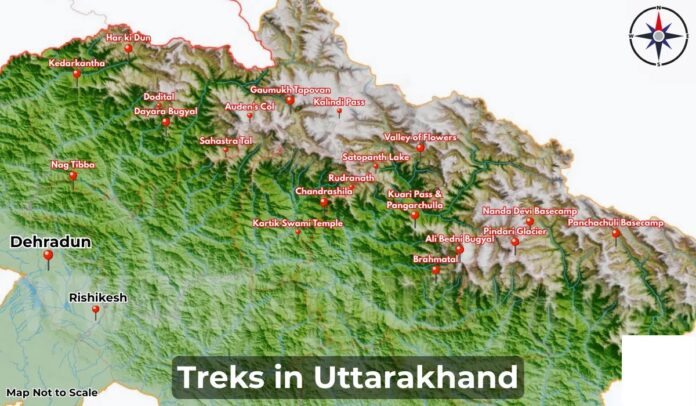
Dehradun: In a significant boost to adventure tourism and sustainable development in the Himalayas, the Uttarakhand Tourism Development Board (UTDB) is set to launch a comprehensive GPS-based technical survey and digital documentation project covering 100 prominent trekking and hiking routes across the state. The initiative aims to create detailed, reliable resources for trekkers, enhance safety measures, and promote responsible tourism in one of India’s most ecologically diverse regions.
The project will equally divide the routes between the Garhwal and Kumaon regions, with 50 treks selected from each. Garhwal will cover districts including Chamoli, Rudraprayag, Tehri Garhwal, Pauri Garhwal, Uttarkashi, and Dehradun, while Kumaon will include Almora, Pithoragarh, Bageshwar, Champawat, and Nainital. These areas are home to iconic trails ranging from accessible weekend hikes to challenging high-altitude expeditions that attract thousands of domestic and international adventurers every year.
The two-year project has been strategically phased. During the first 12 months, teams will conduct extensive GPS/GIS-based field surveys of all 100 routes. The second year (months 13 to 24) will focus on digital data processing, editing, design, printing, and final delivery of a premium coffee table book. This structured timeline ensures high-quality outcomes while allowing for thorough ground verification.
A standout feature of the survey is the mandatory collection of data on 17 specific parameters for each trek. These include trek difficulty categorization (easy, moderate, or difficult), precise GPS altitude profiles with ±5 meter accuracy, campsite mapping, and extensive day-wise distance documentation. High-resolution visual documentation is also emphasized: photographs must be captured at a minimum of 24MP resolution in both RAW and JPEG formats, while videos will be shot in 4K. Additional data points cover village and local community information, detailed flora and fauna descriptions, insights into local languages and culture, emergency safety protocols, permit and authorization guidelines, and information on telecommunications infrastructure availability along the routes.
All collected data will be prepared in industry-standard GIS-compatible formats such as KML and Shapefile. For each trek route, the project will also produce a certified guide directory and a dedicated permit guide. Importantly, this rich dataset is expected to be integrated into a dedicated UTDB trekking mobile application in the future, providing real-time and comprehensive information to users.
One of the most exciting deliverables of the project is the publication of a premium coffee table book titled ‘The Treks of Uttarakhand’. This high-quality publication will showcase all 100 routes with detailed descriptions, route maps, GPS highlights, difficulty ratings, seasonal weather advisories, cultural commentaries, biodiversity notes, and stunning photography. The book is expected to serve as both a valuable reference for serious trekkers and an attractive souvenir for visitors.
Officials believe the project will significantly elevate Uttarakhand’s position as a global trekking destination. “Accurate mapping and digital documentation are essential for promoting safe and sustainable tourism,” a UTDB spokesperson noted. “This initiative will not only help trekkers plan better but also support local communities by highlighting lesser-known routes and preserving the cultural and ecological heritage of the region.”
The move comes at a time when trekking in Uttarakhand has seen renewed interest post-pandemic, with popular routes like the Valley of Flowers, Roopkund, Har Ki Dun, and Kedarkantha drawing large crowds. However, concerns around safety, environmental impact, and inadequate infrastructure have persisted. By providing detailed emergency information, accurate GPS data, and community linkages, the project addresses many of these challenges.
Secretary Tourism Dhiraj Garbyal said” This initiative will significantly enhance trekker safety, promote sustainable tourism, and boost local economies. The digital database will also be integrated into the upcoming UTDB Trekking App, making Uttarakhand a more accessible and responsible adventure destination.
Environmentalists have welcomed the initiative, hoping it will encourage regulated tourism that minimizes ecological damage. Local stakeholders, including village communities and certified guides, are also expected to benefit through greater visibility and economic opportunities.
Once completed, the project is likely to set a benchmark for trekking infrastructure development in other Himalayan states. With digital tools becoming central to modern travel, Uttarakhand’s proactive step could transform how adventure seekers experience the state’s majestic landscapes.
The UTDB has indicated that the tendering or empanelment process for expert agencies to execute the surveys will begin shortly. As the project unfolds, it promises to unlock new dimensions of Uttarakhand’s trekking potential while ensuring that its pristine natural beauty and rich cultural tapestry are preserved for future generations.