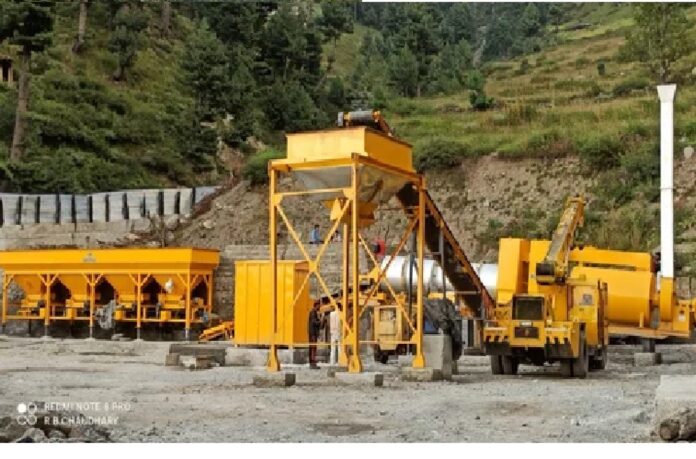
DE Bureau (Dehradun): The Uttarakhand Cabinet, chaired by Chief Minister Pushkar Singh Dhami, on February 25 approved amendments to the rules governing the establishment of hot mix plants, granting significant relaxation in distance norms for mountainous districts. The decision aims to accelerate road construction and black-topping works in the state’s challenging hilly terrain, where geographical constraints have long delayed infrastructure projects.
Under the revised Uttarakhand Stone Crusher, Screening Plant, Mobile Stone Crusher, Mobile Screening Plant, Pulveriser Plant, Hot Mix Plant, Ready Mix Plant Licence (Third Amendment) Policy-2024, hot mix plants in hilly regions may now be set up as close as 50 metres from national highways and state highways—down from the previous mandatory 100 metres. The 100-metre rule remains unchanged for plain districts, including parts of Haridwar, Udham Singh Nagar, and Dehradun. The Cabinet cleared a total of 27 proposals during the meeting, including the state budget for the financial year 2026-27 amounting to ₹1.11 lakh crore.
Old Rules Hindered Progress in Hills
Uttarakhand’s mountainous districts have historically faced difficulties in road development due to steep slopes, dense forests, and limited flat land. The earlier 100-metre buffer requirement made it extremely difficult to find suitable sites for hot mix plants, often delaying asphalt production and forcing contractors to transport material from distant locations. This increased costs, extended project timelines, and hampered schemes such as the Pradhan Mantri Gram Sadak Yojana (PMGSY) and state road programmes. Officials from the Geology and Mining Department, which oversees the policy, explained that contractors and construction firms had repeatedly highlighted these practical obstacles. In many cases, securing environmental clearances and land in compliance with the distance norm took years, stalling critical connectivity projects in remote areas.
Changes and Targeted Relief
The amended policy introduces a clear distinction based on topography:
| Area | Old Distance Norm (metres) | New Distance Norm (metres) |
|---|---|---|
| Hilly regions | 100 | 50 |
| Plain regions | 100 | 100 |
The relaxation applies specifically to hilly districts, where land scarcity and environmental restrictions are most acute. All plants—old and new—will continue to require mandatory clearance from the Uttarakhand Pollution Control Board to ensure compliance with air and noise pollution standards. Chief Minister Dhami emphasised that the government is prioritising development in mountainous regions. “Such amendments will boost the rural economy by speeding up road connectivity, generating employment, and supporting industries linked to construction,” he said during the meeting.
Expected Benefits and Safeguards
Department officials anticipate that easier access to hot mix plants will reduce project costs, shorten execution timelines, and improve the quality and durability of roads. Faster availability of construction material is expected to benefit thousands of kilometres of pending rural and state highways, enhancing access to markets, schools, and healthcare for remote communities. Industry stakeholders welcomed the move, noting that it would create additional jobs in plant operations, transportation, and allied services. Contractors expressed optimism that the change would revive stalled projects and attract more investment in the state’s infrastructure sector.
Environmental experts have cautioned that reducing the buffer distance could raise the risk of localised pollution from dust and emissions. However, the Geology and Mining Department has assured that strict enforcement of pollution norms, regular monitoring, and adherence to siting guidelines will mitigate potential impacts. The decision reflects the state government’s broader push to overcome terrain-specific barriers and deliver faster infrastructure development in Uttarakhand’s hills. With the new norms now in effect, authorities expect visible progress in road connectivity across the mountainous districts in the coming months.