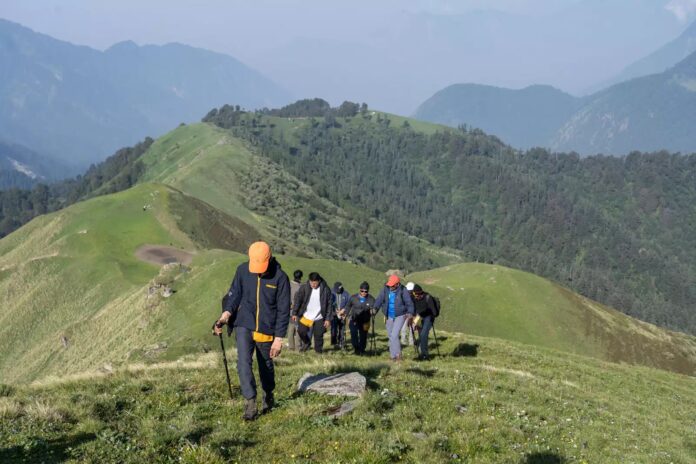
(Dehradun) : In a major step towards enhancing safety, sustainability, and structured development of adventure tourism in the Himalayas, the Uttarakhand Tourism Development Board (UTDB) has launched a comprehensive statewide initiative to scientifically document and digitally map 50 prominent trekking routes across the Garhwal and Kumaon regions in Phase-I.
The project, supported by Trek The Himalayas (TTH) — a certified adventure operator with extensive expertise in Himalayan trails — represents one of the most detailed adventure-tourism planning efforts ever undertaken in the state. Spanning 12 months, the initiative focuses on routes below 5,000 metres and covers key districts including Chamoli, Tehri Garhwal, Rudraprayag, Uttarkashi, Bageshwar, Pithoragarh, and Champawat.
Uttarakhand, fondly known as Devbhoomi, is renowned worldwide for its pilgrimage sites, alpine meadows, glaciers, and pristine trekking corridors. However, many historic and cultural trails have remained undocumented or only partially mapped, hindering effective safety measures and planned tourism growth.
This Phase-I effort will scientifically map and document 50 routes, including iconic treks such as:
- Valley of Flowers–Hemkund Sahib
- Kedarnath–Vasuki Tal
- Kuari Pass
- Roopkund
- Pindari Glacier
- Panchachuli Base Camp
- Har Ki Doon
along with several lesser-known heritage and cultural paths.
Each route will be surveyed in detail using GPS technology and GIS-based systems. The documentation includes altitude profiles, distance mapping, campsite identification, water sources, mobile network coverage, and dedicated rescue-route planning. The verified data will be compiled into digital maps, a dedicated state-level trekking repository, and high-quality visual and written materials to aid future planning and official use.
Dhiraj Garbiyal (IAS), CEO of the Uttarakhand Tourism Development Board, emphasised the project’s transformative potential:
“This project will bring scientific structure and accuracy to Uttarakhand’s trekking network while ensuring that safety and sustainability remain central to tourism development in the Himalayas. The initiative will not only support better preparedness and visitor management but also open new livelihood opportunities for our mountain communities through responsible adventure tourism.”
He added that the effort would help position Uttarakhand as an international model for eco-adventure tourism and sustainable mountain development.
A standout feature of the initiative is its strong focus on community involvement. Local youth and guides from villages along the trekking corridors will receive training in GPS handling, eco-tourism practices, and basic trek leadership skills. This approach aims to distribute the benefits of tourism growth locally, promote environmental stewardship, and help preserve the fragile Himalayan ecosystems.
The project will unfold in phases over the year: beginning with route planning, permissions, and coordination with district and forest authorities; followed by seasonal field surveys for year-round accuracy; and concluding with data analysis, GIS mapping, content creation, and publication.
The final outputs will be integrated into UTDB’s Trekking & Hiking Master Plan, serving as a vital resource for tourism planning, rescue operations, digital platforms, and promotional activities. Additional compilations will include trek itineraries, terrain notes, flora-fauna references, photography highlights, permit guidelines, local guide and homestay databases, and rescue-evacuation frameworks — ensuring authentic, standardised, and safety-focused information for visitors, tour operators, and administrators.
UTDB officials noted that this structured documentation will enhance route safety, environmental monitoring, and visitor-flow regulation while generating employment through guiding, homestays, logistics, and eco-tourism ventures. The project also aligns with the state government’s goal of curbing outward migration from hill districts by boosting local income opportunities within the tourism sector.
Upon successful completion and evaluation of Phase-I, UTDB plans to launch Phase-II, covering another 50 routes — ultimately creating a comprehensive database of 100 systematically documented trekking trails across Uttarakhand.