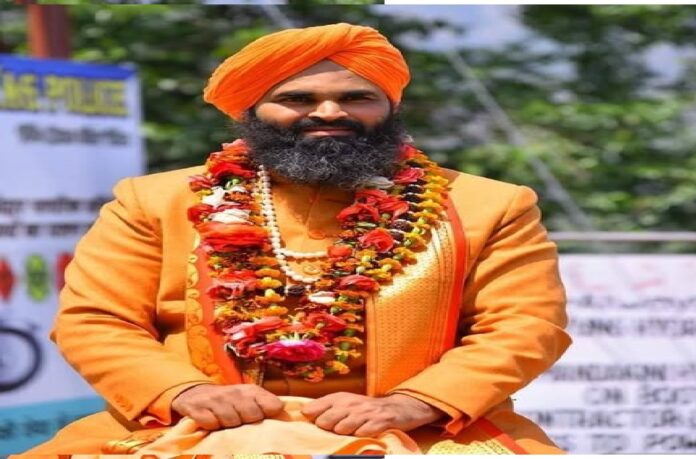
Nanded: In a momentous development for Hindu devotees worldwide, the revered Kedarnath Dham, nestled in the lap of the Himalayas and one of the twelve Jyotirlingas as well as the foremost among the Panch Kedars, is set for a significant religious transition. The 324th Jagadguru Rawal Bhimashankar Ling Shivacharya Maharaj has announced his resignation from the sacred position due to health concerns. The 70-year-old spiritual leader made this declaration during the silver jubilee celebrations of his own Pattabhishekam (coronation) at the Bhimashankar Math in Nanded, Maharashtra.
The event, attended by saints, seers, devotees, and disciples from across India, culminated in an eight-day Vishwa Shanti Yajna (World Peace Fire Ritual). In a poignant ceremony, Rawal Bhimashankar Ling formally named his disciple, Shivacharya Shanti Ling (also known as Kedar Ling), as his successor. This move ensures the continuity of an ancient tradition that has defined the spiritual governance of Kedarnath for centuries.
Speaking at the occasion, Rawal Bhimashankar Ling emphasized the importance of preserving the sanctity of the Kedar Peeth. “The continuity of tradition and the dignity of the Peeth are paramount,” he stated. “It is essential to select a successor while time permits.” He bestowed upon his disciple a garland and shawl, performing the ritualistic initiation in the presence of the gathered assembly. The saints in attendance welcomed the decision, hailing it as aligned with longstanding customs.
Senior priests from the Badri-Kedar Temple Committee (BKTC), including Shiv Shankar Ling, and former chief priest Lakshmi Prasad Bhatt, who traveled to Nanded for the event, confirmed the appointment. “The Rawal has chosen Kedar Ling Maharaj as his successor in this program held at his Math,” they affirmed, underscoring the gravity of the moment.
The announcement will be formally ratified on the auspicious occasion of Mahashivratri, falling on February 15, 2026, at the Omkareshwar Temple in Ukhimath – the winter seat of Lord Kedarnath and the administrative hub for the Panch Kedars. This ceremony will involve representatives from local rights-holders (hak-hakukdhari) and customary stakeholders (dasturdhari), including villages such as Dangwadi, Bhatwadi, Chuni-Mangoli, Kimana, Pacholi, Dungar, and Semla. Their presence ensures that the transition adheres to community consensus and ancient protocols.
Following this, after the closure of the Kedarnath temple portals for the winter season, the five Acharyas from the Veerashaiva sect’s Panch Peeths will convene to unanimously endorse the new Rawal. A grand Pattabhishekam ceremony will then be held, installing Shivacharya Shanti Ling as the 325th Jagadguru Rawal of Kedar Peeth. Amid Vedic chants and elaborate rituals, he will ascend the sacred throne, marking a new chapter in the temple’s illustrious history.
Kedarnath Dham, perched at an elevation of approximately 11,755 feet above sea level in Uttarakhand’s Rudraprayag district, opens its doors to pilgrims for only six months each year due to harsh Himalayan winters. During the off-season, the deity’s worship shifts to the Omkareshwar Temple in Ukhimath. This ancient shrine, revered as a pinnacle of Sanatan Dharma, attracts millions of devotees annually, seeking spiritual solace amid its breathtaking snowy vistas.
The Legacy of the Rawal Tradition
The position of Rawal at Kedarnath is steeped in history and spiritual significance, tracing its roots back over 400 years. Rawals are traditionally unmarried ascetics from Karnataka’s Veerashaiva Lingayat community, devoted exclusively to the worship of Lord Shiva. They serve as the chief custodians of the temple’s rituals, overseeing the primary pooja (worship) and ensuring the sanctity of all ceremonies. The Rawal is present during the opening and closing of the temple portals, symbolizing the unbroken link between the divine and the devotees.
The tradition began with Bhukund Ling, the first Rawal, and has been meticulously preserved through generations. Rawal Bhimashankar Ling, as the 324th in this lineage, has upheld these duties with unwavering dedication. His tenure has been marked by efforts to maintain the temple’s spiritual integrity amid growing pilgrimage numbers and modern challenges, such as climate change impacts on the fragile Himalayan ecosystem.
Shivacharya Shanti Ling, the designated successor, has been under the mentorship of Rawal Bhimashankar Ling for several years. He has undergone rigorous training in traditional rituals, Vedic scriptures, and the intricate customs of Kedarnath worship. This apprenticeship ensures that the new Rawal will seamlessly continue the legacy, fostering discipline and devotion. The formal declaration will occur in the presence of the temple committee, Panch Gai (five village councils), rights-holders, customary stakeholders, Kedar Sabha members, and the five chief priests, reinforcing communal harmony.
To encapsulate the key aspects of this transition, here is a summary table:
| Serial No. | Description | Details |
|---|---|---|
| 1 | Current Rawal | Jagadguru Bhimashankar Ling Shivacharya (324th) |
| 2 | Age and Reason | 70 years, health concerns |
| 3 | Successor | Shivacharya Shanti Ling (Kedar Ling) – 325th Rawal |
| 4 | Confirmation Date | Mahashivratri, February 15, 2026, Omkareshwar Temple, Ukhimath |
| 5 | Pattabhishekam | After temple portals close, by Panch Acharyas of five Peeths |
| 6 | Tradition Origin | Bhukund Ling (first Rawal), over 400 years old |
| 7 | Sect | Veerashaiva, from Karnataka |
| 8 | Role | Chief worshipper, unmarried Shiva devotee |
This table highlights the structured and time-honored process, ensuring transparency and adherence to tradition.
Broader Significance in Hindu Spirituality
This leadership change at Kedarnath is more than a mere administrative shift; it represents the enduring vitality of Sanatan Dharma’s institutions. In an era where rapid modernization often clashes with ancient practices, such transitions reaffirm the resilience of spiritual lineages. Devotees and locals in the region are abuzz with excitement, especially as this occurs ahead of the upcoming Char Dham Yatra – the annual pilgrimage to the four sacred Himalayan shrines: Yamunotri, Gangotri, Kedarnath, and Badrinath.
The Rawal is viewed as a living embodiment of Kedarnath’s spiritual essence, bridging the mortal and divine realms. According to religious beliefs, the Rawal’s role ensures that Lord Shiva’s blessings flow uninterrupted to humanity. This event sends a powerful message of unity and continuity within Hinduism, particularly in Uttarakhand, where Kedarnath holds a special place as a beacon of faith amid natural calamities like the 2013 floods that tested the region’s resolve.
Historically, Kedarnath has weathered invasions, natural disasters, and colonial influences, yet its core traditions remain intact. The Veerashaiva connection, originating from Karnataka, exemplifies the pan-Indian nature of Hindu worship, where regional sects contribute to national spiritual heritage. Scholars note that this inter-state linkage fosters cultural exchange, with Karnataka’s Lingayat philosophy – emphasizing equality, devotion, and social reform – influencing Kedarnath’s egalitarian approach to pilgrims from all walks of life.
Moreover, the timing on Mahashivratri adds layers of symbolism. This festival, dedicated to Lord Shiva’s cosmic dance of creation and destruction, aligns perfectly with themes of renewal and succession. As millions fast, meditate, and visit Shiva temples tomorrow, the confirmation at Ukhimath will resonate far beyond the Himalayas, inspiring global Hindu communities.
In recent years, the BKTC has modernized aspects of temple management, including online bookings and eco-friendly initiatives to handle the influx of over 1.5 million visitors annually. However, the Rawal’s spiritual authority remains untouched, underscoring the balance between tradition and progress. Health-related resignations, while rare, are not unprecedented; they reflect the human element in divine service, where wisdom dictates timely handover to ensure the Peeth’s perpetuity.
For locals in Rudraprayag, this transition bolsters economic prospects tied to pilgrimage tourism. Villages like those represented in the ceremony rely on the yatra for livelihood, and a smooth handover minimizes disruptions. Environmentalists also watch closely, as Kedarnath’s fragile ecology demands sustainable practices under the new leadership.
As the sun sets on Rawal Bhimashankar Ling’s era, his legacy of devotion paves the way for Shivacharya Shanti Ling’s stewardship. This change not only adds a new link to Kedarnath’s storied chain but also reinforces the timeless message of Sanatan Dharma: that faith, like the eternal Himalayas, endures through change.