Rudraprayag: In the far-flung rural areas of Uttarakhand, women are breaking barriers and stepping into the spotlight of self-reliance. Not only are they establishing their own income sources, but they are also creating employment opportunities for fellow women in their communities. In Sari village of Ukhimath block, the Jute Unit run by Jeevan Jyoti CLF under Deoriyatal Gram Sangathan has emerged as a powerful symbol of women’s economic empowerment. Meanwhile, in Mahad village of Augustmuni block, women are being trained in fruit processing under the Gramothan project, opening new doors to entrepreneurship.
The Jute Unit in Sari village uses modern machines to produce high-quality jute-based products. Women artisans craft school bags, carry bags, stylish jute purses for women, file bags, and other utility items that enjoy strong demand in local and nearby markets. Currently, 10 women from the village are directly associated with the unit, receiving regular employment and respectable earnings.
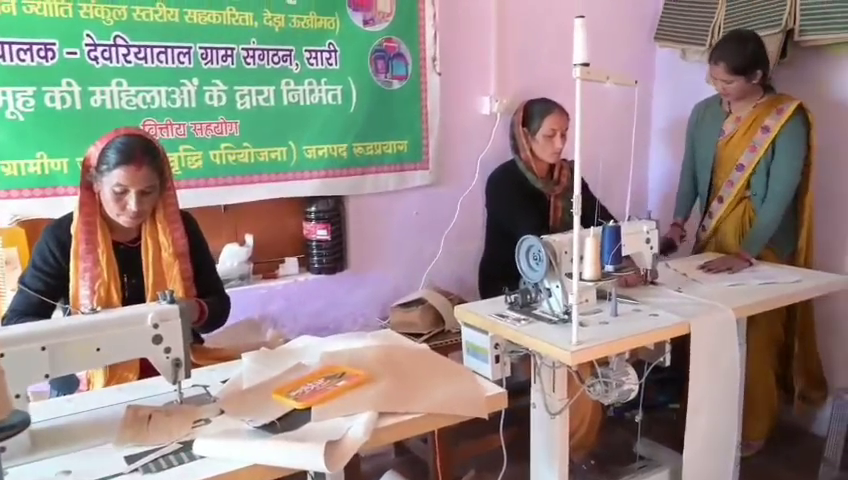
Women members Prema Devi and Pooja Negi shared their experiences: “Earlier, our world was limited to household chores. The jute unit has transformed our lives. We have become skilled, financially independent, and our family income has increased. This work has boosted our confidence, and we now actively contribute to the household economy.”
Block Development Officer Ukhimath, Anushka, said, “Through the Jute Unit, women are finding self-employment opportunities right at the local level. The unit was established with the support of the National Rural Livelihood Mission and Gramothan Mission. In the future, we plan to expand the unit and connect more women to this initiative.”
Fruit Processing Training: Adding Value to Local Produce
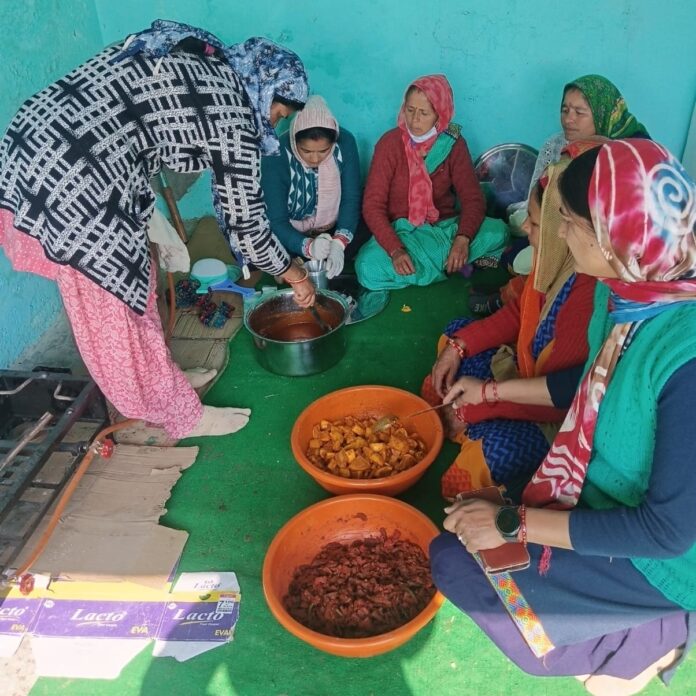
In Mahad village of Augustmuni block, the Gramothan project, with financial support, has established a community enterprise under ‘Shiv Shakti Autonomous Cooperative’. The Rudraprayag Industries Department is conducting a two-day hands-on training programme in fruit processing for the women members.
During the training, participants are learning to prepare value-added products such as guava jelly, apple jam, mixed pickles, various chutneys, and other nutritious, safe food items using locally available fruits. The primary objectives are to ensure maximum and efficient utilization of local produce, create healthy and hygienic food products, and provide women with income-generating opportunities through small-scale enterprises.
This initiative not only strengthens women’s economic position but also develops new dimensions of employment based on local resources.
Chief Development Officer Rudraprayag, Rajendra Singh Rawat, stated, “Training programmes like fruit processing are proving highly effective in economically empowering women in rural areas. By equipping them with these skills, we are helping them move forward with confidence toward self-employment.”
Both initiatives— the Jute Unit in Sari and the fruit processing training in Mahad—are shining examples of how government schemes, community organizations, and local administration can work together to uplift rural women. These efforts are not just generating income but also reducing migration, preserving traditional skills, and promoting sustainable livelihoods. As more women gain financial independence, they are emerging as pillars of strength for their families and communities.
With continued support and expansion, such models hold the potential to transform the economic landscape of Uttarakhand’s remote villages, making self-reliance a reality for thousands more women in the coming years.