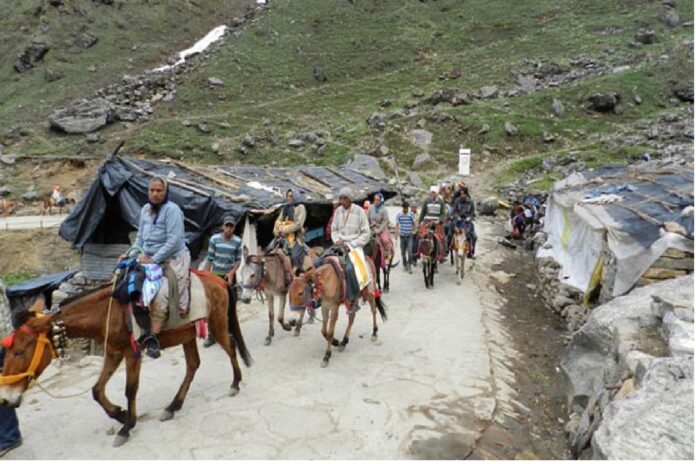
Dehradun: Nestled in the lap of the Himalayas, the sacred abode of Lord Shiva at Kedarnath is not only a symbol of faith but also a significant challenge for Uttarakhand’s fragile environment. Every year, over 1.6 million devotees undertake this arduous pilgrimage, boosting the local economy but also placing immense pressure on the ecosystem. Now, a groundbreaking and eco-friendly initiative is set to address this issue. Aligning with Prime Minister Narendra Modi’s Swachh Bharat Abhiyan and Namami Gange Mission, and under the visionary leadership of Chief Minister Pushkar Singh Dhami, a collaborative pilot project by the Uttarakhand Tourism Development Board is being launched on the Kedarnath yatra route.

This project will scientifically collect mule dung and dried pine needles (known locally as pirul) scattered in the forests, converting them into high-energy biomass pellets. The initiative will not only keep the Mandakini and Ganga rivers clean but also reduce the risk of forest fires while creating new employment and income opportunities for local communities.
The most sensitive section of the Kedarnath yatra route is the 19-km trek from Gaurikund to Kedarnath. During the pilgrimage season, around 6,000 mules operate daily on this path, producing at least 25 tonnes (25,000 kg) of dung. Most of this waste is discarded along the route. During rainfall or snowmelt it washes directly into the Mandakini River — a major tributary of the Ganga — undermining the goals of the Namami Gange Mission. Piles of dung create foul odours, dry dung particles pose respiratory infection risks for trekkers, attract disease-carrying insects like mosquitoes, and diminish the spiritual experience for pilgrims in this high-altitude, low-resilience ecosystem.
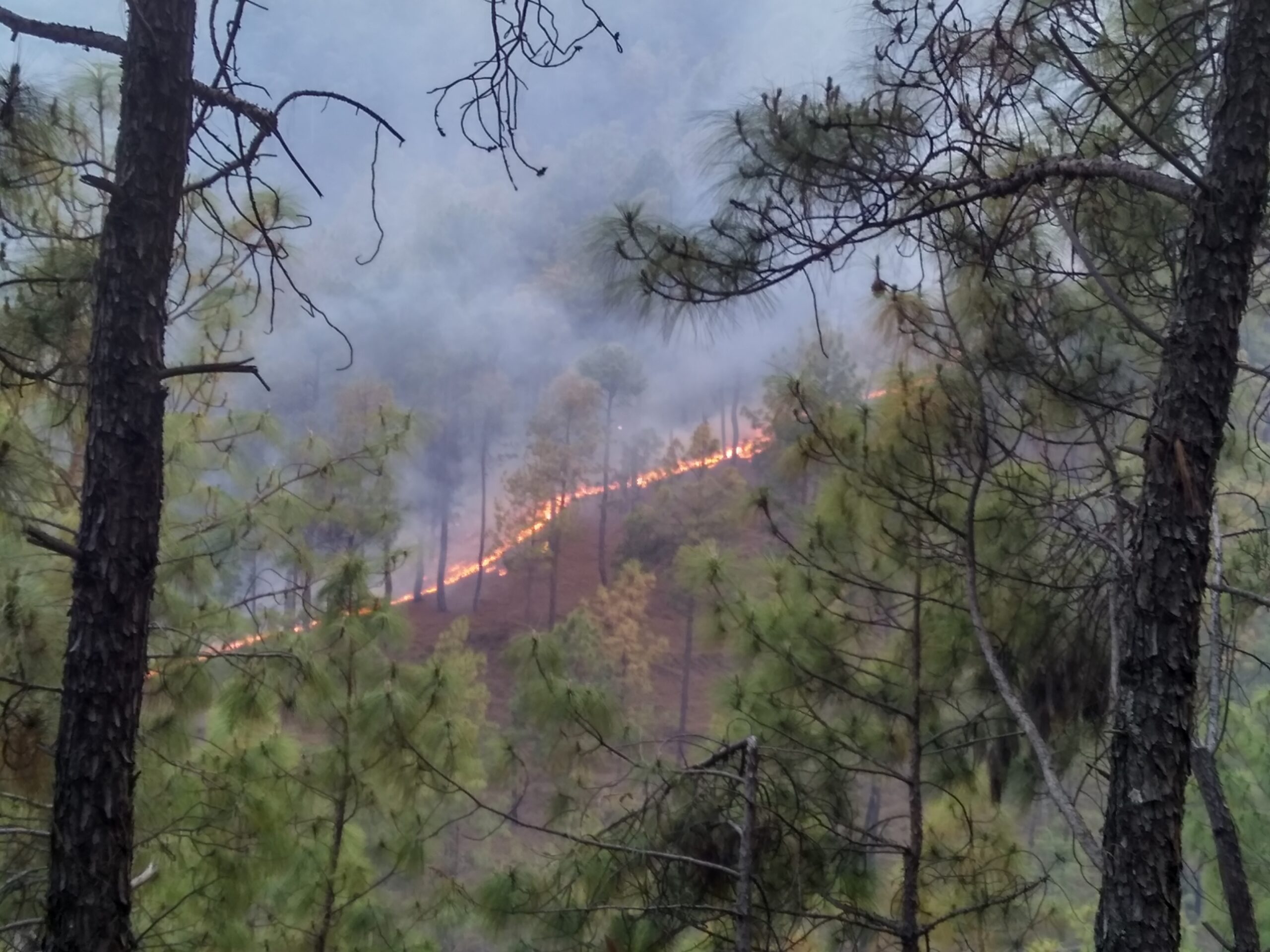
Compounding the issue is the accumulation of pirul in surrounding pine forests. These highly flammable needles are a primary cause of annual forest fires in Uttarakhand. Unmanaged dung and pirul together create a dual threat: polluting rivers on one side and increasing fire risk on the other. This one-year pilot project aims to turn these liabilities into opportunities. Under the plan, mule dung and an equivalent quantity of pirul will be collected from the route. The two will be mixed in a 50:50 ratio and processed scientifically into high-energy biomass pellets.
How will the project work?
Operations will begin with daily collection. Around 30 sanitation workers will systematically gather dung along the entire route. Local Self-Help Groups (SHGs) will collect pirul, providing additional income for village women and youth. At a proposed central processing unit near Gaurikund or Sonprayag, dung will first be dewatered. Liquid waste will undergo biological treatment in 10,000-litre tanks to meet pollution control standards. The solid residue will be shredded, mixed with pirul, and compressed into pellets. The plant will produce thousands of kilo of pellets daily during the season.
Pellet utilisation and circular economy
These pellets will form the foundation of a circular economy. Six large hot-water boilers will be installed at key stops like Rambara, Lincholi, and Kedarnath, supplying 3,000-4,000 litres of hot water per hour in sub-zero temperatures — a major relief for pilgrims. Additionally, 20 low-emission pellet stoves will be distributed to local vendors and tea stalls, reducing LPG and firewood costs by around 30%, halting deforestation, and significantly cutting smoke pollution.
Significant environmental benefits
Annually, the project is expected to divert approximately 5,460 tonnes of waste from entering the Mandakini and ultimately the Ganga. Removing pirul will reduce forest fire risk in the project area by up to 20%. Methane emissions — a greenhouse gas far more potent than carbon dioxide — from decomposing dung will also see a substantial decline, which is particularly crucial for the climate-vulnerable Himalayan region.
Economic-social benefits and self-sustainability
The project will create over 30 full-time equivalent seasonal jobs and distribute more than ₹27 lakh in incentives. Pilgrims will enjoy cleaner paths, lower health risks, and hot water facilities. Most importantly, pellet sales are projected to generate around ₹50 lakh annually, making the project fully self-sustaining after operational costs. After 12 months, the facility will be handed over in phases to the Kedarnath Nagar Panchayat. Forty local residents will receive comprehensive training in plant operation and maintenance, ensuring long-term local management.
Tourism Secretary, Dheeraj Garbyal, stated that if successful, this model can be replicated on other major pilgrimage routes in Uttarakhand — such as Yamunotri, and Hemkund Sahib — as well as sensitive sites across the Himalayas. The initiative sends a clear message: environmental conservation, pilgrim welfare, and local livelihoods are not mutually exclusive. With scientific planning and community participation, waste can be transformed into a resource. Kedarnath can thus set a new benchmark for responsible and sustainable tourism — where faith and nature are both honoured.