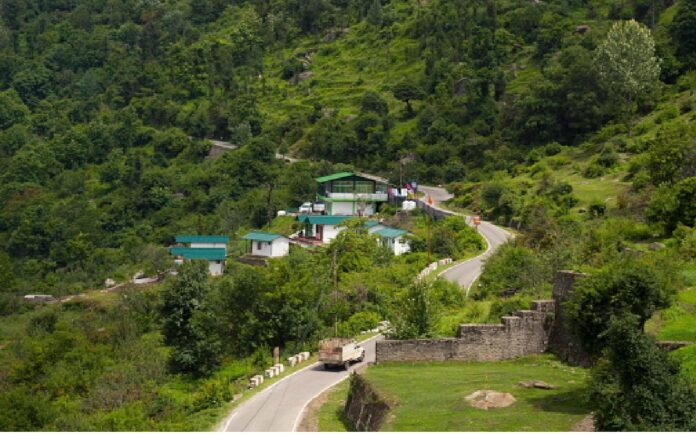
DE Bureau (Dehradun): Uttarakhand’s lush forests, long a draw for nature lovers, are increasingly becoming engines of local economic growth through targeted eco-tourism development. The Forest Department’s Eco-Tourism Cell is actively developing 30 forest-adjacent sites across various districts, aiming to diversify tourism offerings, reduce pressure on established hotspots, and generate sustainable livelihoods for communities. Of these, infrastructure and basic facilities are under construction at 15 locations in the current financial year, with work on the remaining 15 slated for the next fiscal. The initiative aligns with the state’s broader strategy to promote responsible tourism amid rising visitor numbers.
Tourism remains a cornerstone of Uttarakhand’s economy, contributing an estimated 13–14 per cent to the Gross State Domestic Product (GSDP) through direct and indirect channels. Official figures show that more than six crore tourists and pilgrims visited the state in 2025—a record high since Uttarakhand’s formation in 2000—including over 1.92 lakh international visitors. This surge underscores the need for balanced development that spreads economic benefits to lesser-known areas while preserving natural assets.
Expanding Beyond Traditional Destinations
Uttarakhand currently has 61 recognised eco-tourism sites, but the department is expanding this network. Following proposals from all forest divisions—over 50 in total—authorities selected 30 for phased development. Some are entirely new, while others involve renovation and upgradation.
Chief Conservator of Forests (Eco-Tourism) P.K. Patro explained that the focus is on creating self-sustaining circuits managed by local Eco-Development Committees. “This approach ensures direct employment opportunities for villagers through homestays, guiding, and allied services,” he said.
Currently, work is progressing at 15 priority sites, including:
- Dehradun-Mussoorie circuit: Jhajra (Anand Van), Timli, Asharodi, Kadwapani, Devalsari, and Binog (Mussoorie).
- Jaunsar-Bawar-Uttarkashi: Devvan, Kanasar, Harsil, Budher, Sandra, and Jarmola.
- Almora-Nainital-Haldwani: Shitalakhet, Binsar, Kilbari, Mahesh Khan, Vinayak, Chorgaliya, Jaulasal, and Pawalgarh.
- Pauri-Rudraprayag-Tehri: Khirsu, Chopta, Dhanaulti, Tehri Lake area, Kaudiya (Rishikesh), and Chaurasi Kuti (Rajaji National Park).
- Pithoragarh-Champawat: Munsiyari, Khalia Top, Boom, and Paharpani.
Facilities being developed include eco-huts, signages, nature trails, photography points, and infrastructure for snow tourism. These are expected to be completed within the current financial year.
Community-Led Management for Sustainability
A key feature is the handover of operations to local Eco-Development Committees, empowering residents to manage sites and share revenues. This model promotes conservation while creating jobs in guiding, hospitality, and handicrafts, particularly in remote villages. The department is also evaluating over 20 additional proposals for future inclusion. By opening untouched forest areas responsibly, the initiative seeks to distribute tourism benefits more equitably, ease overcrowding at popular pilgrimage and hill stations, and reinforce Uttarakhand’s appeal as a year-round eco-destination. As visitor numbers continue to climb, such community-centric developments are vital to ensuring tourism remains sustainable and inclusive for the state’s rural populations.