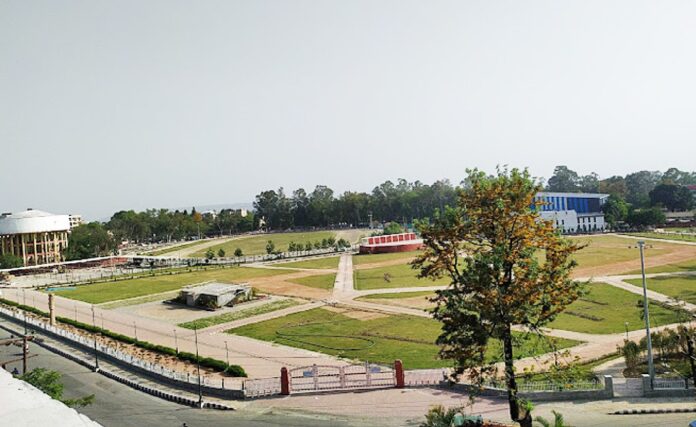
Dehradun: The much-hyped cycle track and rubberized walking path developed at Dehradun’s iconic Parade Ground under the Smart City Mission and Mussoorie Dehradun Development Authority (MDDA) have come under severe criticism. Even before the facilities are fully completed and officially inaugurated, complaints of cracks appearing at multiple spots, surface peeling, and uneven patches have surfaced, raising serious questions about construction quality and material used.
Parade Ground, a historic landmark dating back to the British era, remains the city’s largest open space and a daily hub for thousands of residents who come for morning-evening walks, jogging, cycling, and fitness activities. Under the Smart City beautification initiative, the project included a dedicated cycle track, rubberized walking paths, open gyms, children’s play areas, and overall landscaping enhancements. Official sources indicate that approximately Rs 14.58 crore has been spent so far on the Parade Ground beautification component, with the total project cost estimated higher (some reports suggest around Rs 20 crore or more for related works). The works were claimed to be largely completed in 2023-2024.
However, residents and regular users report that problems emerged soon after the monsoon season, with cracks, pitting, and detachment of rubberized layers becoming evident. According to local accounts and earlier media reports (including from Hindustan), quality complaints prompted repairs by Dehradun Smart City Limited, but issues persist. The track surface has become uneven, with cement and synthetic layers coming loose in places, making it risky for cyclists and walkers, especially during wet weather.
Citizens express deep disappointment, calling it a “waste of public money.” Hundreds who rely on the ground for health and recreation feel let down by the substandard execution. Experts point out that in a seismically sensitive region like Uttarakhand, high-quality, durable materials are essential for such infrastructure. While Smart City projects often adopt rubberized or synthetic tracks for better cushioning and safety, poor maintenance planning and disregard for local weather patterns (heavy rainfall and temperature variations) frequently lead to such failures. Dehradun had seen announcements of its first synthetic cycling track in 2024, but quality concerns have repeatedly surfaced in public feedback.
The maintenance responsibility now lies with MDDA. Citizens are demanding an independent inquiry by MDDA and Smart City authorities to investigate the root causes, fix accountability on the contractor, and rebuild the track using superior-grade materials. If not addressed promptly, this key public health amenity risks becoming unusable.
This issue extends beyond one facility—it highlights broader concerns about transparency, accountability, and quality control in government projects. Citizen groups are preparing to raise the matter further, urging swift intervention to preserve Parade Ground’s role as a vital community space.
Authorities have not yet issued an official response to the latest complaints, but public pressure is mounting for immediate remedial action to restore trust in the Smart City initiatives.