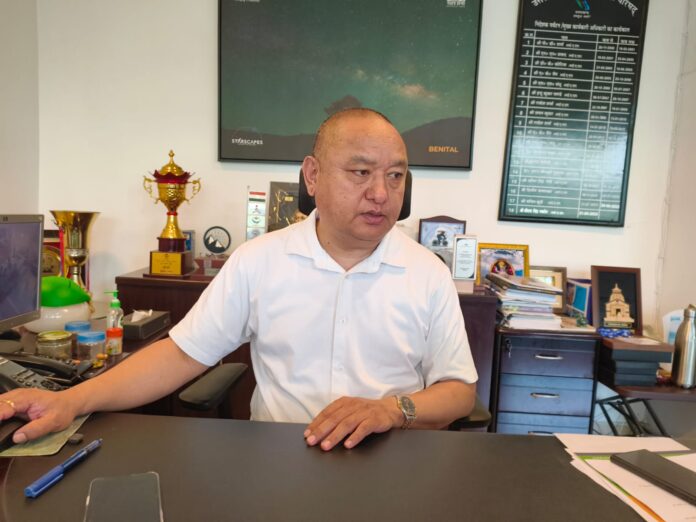
Dehradun: In a significant push to empower rural youth and fortify the state’s grassroots economy, the State-Level Implementation Committee of the Chief Minister’s Entrepreneurship Scheme (Mukhyamantri Udyam Yojana) held a key meeting under the chairmanship of Secretary, Rural Development, Dhiraj Garbyal.
The meeting focused on formulating detailed strategies and an actionable roadmap to ensure effective and systematic implementation of the scheme at the village level across Uttarakhand.
Village-Level Outreach Emphasized
Secretary Dhiraj Garbyal issued comprehensive directives for taking the scheme to every village. Special Chaupals (community gatherings) will be organized in Dehradun, Pauri, Almora, Champawat, and Rudraprayag districts to provide detailed information to local youth on eligibility criteria, application processes, benefits, and business opportunities under the scheme.
These interactive sessions will feature participation from public representatives, successful entrepreneurs sharing their experiences, motivational talks, panel discussions, and practical business guidance. The aim is to build both confidence and hands-on knowledge among young aspirants.
In other districts, awareness campaigns will be conducted through mobile awareness teams at the panchayat level, including door-to-door visits and Gram Sabha-based drives. These will incorporate live demonstrations, on-the-spot application assistance, and solutions to local challenges.
Integration with Community Tourism
Highlighting synergy with the Tourism Department, Dhiraj Garbyal directed efforts to link Self-Help Groups (SHGs) and cluster-level organizations with a community tourism model. The focus will be on generating income through local handicrafts, traditional cuisine, cultural experiences, and rural hospitality, thereby strengthening the local economy.
The Tourism Department will establish quality standards, develop training modules, and implement certification mechanisms to ensure high service standards and competitiveness in the tourism market.
Role of NRLM and Community Cadres
To ensure broader participation, the Uttarakhand State Rural Livelihood Mission (USRLM) will play a key role. Community cadres such as Bank Sakhis and Pashu Sakhis will receive specialized training to support scheme promotion, application assistance, and enterprise operations at the grassroots level. This step is expected to enhance trust at the local level, provide consistent support to beneficiaries, and ensure the long-term sustainability of enterprises.
Strengthening Spoke Centers and Financial Support
All 11 Spoke Centers in the state will be upgraded to provide comprehensive services including entrepreneurship counseling, business plan preparation, documentation assistance, coordination with financial institutions, and market linkages. These centers will be equipped with digital resources, online application portals, and helpdesks for faster, transparent service delivery.
To address initial capital constraints, departments have been directed to collaborate on providing seed capital, subsidies, and microfinance options. Clear guidelines for loans, subsidies, and grants will be enforced, supported by an online tracking and reporting system for transparency.
Clear Timelines Set
The committee has set clear timelines: Special Chaupals and awareness drives in the first three months, followed by intensive training of NRLM community cadres, pilot clusters for homestays and community tourism, and quality certification initiatives over the next 3–9 months. A robust monitoring and evaluation mechanism will be established with regular reporting to facilitate timely corrective actions.
Financial Relief for Beneficiaries
Beneficiaries will benefit significantly from the scheme’s support services. Previously, individuals had to pay fees to Common Service Centers (CSCs) or private vendors for similar assistance in setting up self-employment ventures. The scheme aims to reduce these burdens through integrated support.
Long-Term Impact Expected
Members of the Implementation Committee noted that these decisions will be crucial in extending the scheme to remote areas, offering viable self-employment options to rural youth, and driving employment generation and economic development across the state.
With coordinated efforts, focused training, financial assistance, and optimal use of local resources, the initiative is expected to yield sustainable and long-term results. Further directives were also issued to strengthen the guidelines for effective execution.
The Chief Minister’s Entrepreneurship Scheme is designed to promote self-reliance among rural youth and contribute to Uttarakhand’s broader economic growth through inclusive entrepreneurship.