Dehradun: In a landmark move aimed at elevating the Char Dham Yatra from a spiritually significant journey to a globally benchmarked, safe, and economically empowering experience, the Uttarakhand government is placing unprecedented emphasis on skill development. The state is gearing up for the 2026 edition of the revered pilgrimage by prioritizing professional training for thousands of frontline workers, local entrepreneurs, and community stakeholders involved in the yatra ecosystem.
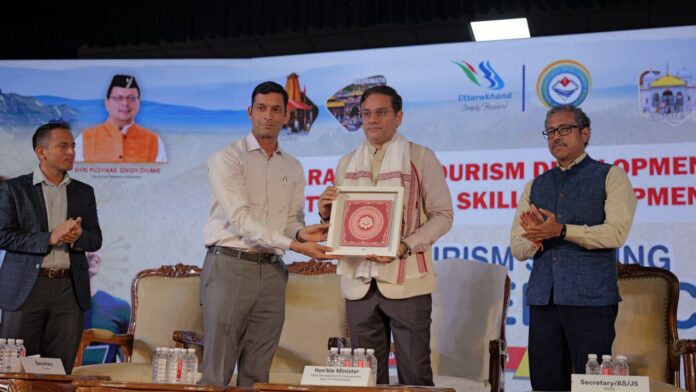
A high-level stakeholder consultation meeting held in Dehradun marked the formal launch of this ambitious initiative. Jointly organized by the Uttarakhand Tourism Development Board (UTDB) and the Department of Skill Development, the meeting brought together senior government officials, industry experts, and representatives from various institutions to chart a comprehensive roadmap for human resource upgradation.
Cabinet Minister for Skill Development and Employment, Saurabh Bahuguna, inaugurated the session. He was joined by Tourism Secretary Dhiraj Singh Garbyal, Skill Development Secretary C. Ravishankar, Additional Secretary (Tourism) Abhishek Ruhela, and Additional Secretary Narendra Singh Bhandari, among other key dignitaries. The gathering underscored a pivotal shift in approach: recognizing that the success of the Char Dham Yatra hinges not just on infrastructure but profoundly on the capabilities of the people who interact directly with millions of pilgrims.
Why Skills Matter for Char Dham
The Char Dham Yatra, encompassing the sacred shrines of Yamunotri, Gangotri, Kedarnath, and Badrinath, stands as one of India’s most revered Hindu pilgrimages. Nestled in the majestic Himalayas, these sites attract lakhs of devotees annually, drawn by deep spiritual faith and the quest for divine blessings. In recent years, the yatra has seen explosive growth, with over 47 lakh pilgrims visiting in 2024 alone and registrations often exceeding 65 lakh. However, this surge brings formidable challenges: treacherous high-altitude terrain, unpredictable weather, overcrowding, traffic snarls, waste management issues, and health risks, including cardiac-related incidents that have claimed lives in past seasons.
Past yatras have highlighted vulnerabilities. Extreme weather events led to numerous “zero-pilgrim days” in 2025, disrupting livelihoods and exposing gaps in preparedness. Environmental degradation, strain on local resources, and the need for better crowd and safety management have prompted authorities to rethink strategies. The Uttarakhand government’s current focus on skilling addresses these pain points head-on, aiming to create a more resilient, pilgrim-friendly, and sustainable model.
Minister Saurabh Bahuguna eloquently captured the vision during his address: “Char Dham Yatra is not only a spiritual journey but also a vital livelihood ecosystem for thousands of people. Our focus must be on ensuring that skilling leads to employment, dignity, and long-term sustainability, while building systems that continue to deliver quality services consistently.”
Tourism Secretary, Dhiraj Singh Garbyal highlighted the broader impact: “This kind of initiative will help strengthen tourism in the state. Special emphasis has been placed on generating employment in border and rural areas, which can also help reduce the problem of out-migration.”
Building Competency Standards
Central to the discussions was the critical role of frontline workers — guides, porters, drivers, hotel staff, pony operators, and other service providers who serve as the first point of contact for pilgrims. These individuals often operate in remote, harsh conditions where quick decision-making can mean the difference between safety and peril.
The meeting resolved to establish minimum competency standards for all yatra-related personnel. Short, modular training programs tailored for seasonal workers will be rolled out, enabling rapid skill acquisition without disrupting livelihoods. Upon completion, participants will receive certification and identity cards, enhancing their credibility and giving pilgrims greater confidence.
Training modules will go beyond basic hospitality. Key areas include:
- First Aid and Emergency Response: Equipping workers to handle altitude sickness, injuries, or medical emergencies in areas with limited healthcare access.
- Weather Awareness and Risk Mitigation: Understanding Himalayan microclimates, landslide-prone zones, and safe travel protocols.
- Crowd Management: Techniques to handle peak-season rushes efficiently while maintaining order.
- Cultural Sensitivity and Communication: Ensuring respectful interactions that honor the spiritual essence of the yatra.
- Sustainable Practices: Waste segregation, eco-friendly operations, and conservation awareness to protect the fragile Himalayan ecology.
Experts at the meeting emphasized that such targeted skilling would not only reduce risks but also elevate the overall pilgrim experience, fostering repeat visits and positive word-of-mouth globally.
Empowering Local Communities and Entrepreneurs
The second half of the consultation shifted focus to grassroots economic empowerment. Recognizing that economic benefits from the yatra must primarily accrue to local residents, stakeholders deliberated on inclusive strategies.
Homestay operators will be brought under a ‘Yatra-Ready’ certification framework, setting benchmarks for hygiene, basic amenities, safety, and guest comfort. Small shopkeepers, dhabha owners, artisans, and Self-Help Groups (SHGs) will receive training in food safety, menu diversification, cleanliness standards, and waste disposal. Special emphasis will be placed on branding and marketing local handicrafts, organic produce, and traditional products to connect them with wider markets.
Additional measures include promoting digital payments for seamless transactions, facilitating easy access to credit for small enterprises, and integrating local supply chains. Officials stressed that without robust local capacity building, much of the yatra-generated revenue risks leaking out to external players. Skill development, they argued, is the key to retaining wealth within mountain communities and curbing migration.
Skill Development Secretary C. Ravishankar added: “It is now time to integrate various ongoing training programs into a strong and effective skilling system directly linked to employment and entrepreneurship.”
Scaling Up: Skill Dialogue Series and Sustainable Models
To sustain momentum, the government plans to organize 12 more similar programs across the state under the banner of “Skill Dialogue Series.” These will cascade training opportunities to remote districts, ensuring wider participation.
A sustainable financing model is also in the works, leveraging Public-Private Partnerships (PPP), Corporate Social Responsibility (CSR) funds, and tourism cess revenues. This collaborative approach aims to create a self-reinforcing ecosystem where private sector innovation complements government efforts.
Broader Implications for Uttarakhand’s Future
The Char Dham Yatra is more than a religious event — it is a massive economic engine driving hotels, transport, retail, and allied services. By professionalizing this sector through skills, Uttarakhand is positioning itself as a leader in responsible pilgrimage tourism. Improved service quality can attract higher-spending domestic and international travelers, while safety enhancements could reduce fatalities and build trust.
Challenges remain. Implementing training at scale across rugged terrain requires logistics, funding, and monitoring. Ensuring seasonal workers — many of whom are semi-literate — engage meaningfully demands user-friendly modules in local languages. Coordination between multiple departments and stakeholders will be crucial for seamless execution.
Nevertheless, the April 16 meeting signals strong political and administrative will. As yatra registrations for 2026 gain pace (with offline counters already buzzing), this skilling push comes at an opportune moment.
A Vision of Dignity and Development
For local youth, this initiative opens doors to dignified employment without leaving their villages. Porters trained in modern load management and emergency protocols, guides versed in digital storytelling of Himalayan heritage, and women-led SHGs managing hygienic eateries — these transformations can reshape socio-economic realities in the hills.
Minister Bahuguna’s words resonate deeply: the yatra must deliver not just spiritual fulfillment but also tangible progress for those who make it possible. By investing in human capital, Uttarakhand is scripting a new chapter where faith, safety, professionalism, and prosperity converge harmoniously amid the snow-capped peaks.